Choose a mathematical idea, not just an age label
Start with what you want to explore: sharing fairly, making equal groups, comparing shapes, collecting data or wondering about very large numbers. Then look at how the book presents that idea. A story might be comfortable to listen to while its mathematics is new; another might use familiar arithmetic but more demanding language.
Read-aloud level and independent reading level are separate decisions. You can handle the words while your child looks at an illustration, moves counters or explains a prediction. For independent reading, also preview the vocabulary, page density and length. A publisher age range is a starting point, not evidence that every child in that range will enjoy the same book.
Three ways to use a math story
For a first reading, let the story be a story. Stopping at every number can turn an amusing book into an unexpected assignment. On a later reading, choose one moment to investigate. You do not need a worksheet for every book.
Try a small invitation: “Could we show that with beans?” “What changes if there are two more riders?” or “Which table shape would you try?” Listen for how your child is thinking before supplying a procedure. If the question becomes frustrating, put it aside and return to the narrative.
Match the kind of book to the kind of afternoon
A picture book about equal groups works well when you have a handful of objects and ten minutes to talk. A geometry adventure can lead naturally to drawing or folding paper. A longer mathematical story may suit a curious reader who wants to follow an idea over several chapters.
These are different purposes. A story can introduce language and spark questions; a practice book gives repeated opportunities to use a particular skill; a curriculum supplies a planned sequence of teaching. One appealing story does not need to do all three jobs. If you want additional practice, choose it after you know which part of the idea needs attention.
A simple read, notice, try routine
Read one section without requiring an answer. Invite one observation: a pattern, an unexpectedly large quantity, a character’s method or an illustration that makes something clear. Then offer one optional way to represent it.
For example, after a doubling story, begin with one counter, then two, then four. Ask what might come next before discussing a rule. After a geometry story, compare a few paper shapes. Keep the activity small enough that the original question stays visible.
Finish by asking, “What did that help us see?” A child may notice a mathematical relationship, or simply discover a question to revisit. Either response can help you choose the next book.
When a reader wants a bigger challenge
A bigger challenge can mean explaining a familiar idea more clearly, finding a counterexample, drawing a second representation or asking whether a pattern always works. It does not always mean jumping to a higher grade’s textbook.
For an older child, a narrative about primes, infinity or unusual number patterns can open a conversation even when every detail is not immediately understood. Preview tone as well as difficulty: mathematical wordplay and a fantasy narrator will appeal differently to different readers. Pair the book with conversation rather than treating unfamiliar vocabulary as a readiness test.
The Library lets you explore further by subject and reader information. Our math resources offer a separate route when you are looking for structured practice instead of another story.
Find your family’s fit
Explore the matched edition and its details on our shelf. Check current price, seller and availability before buying.
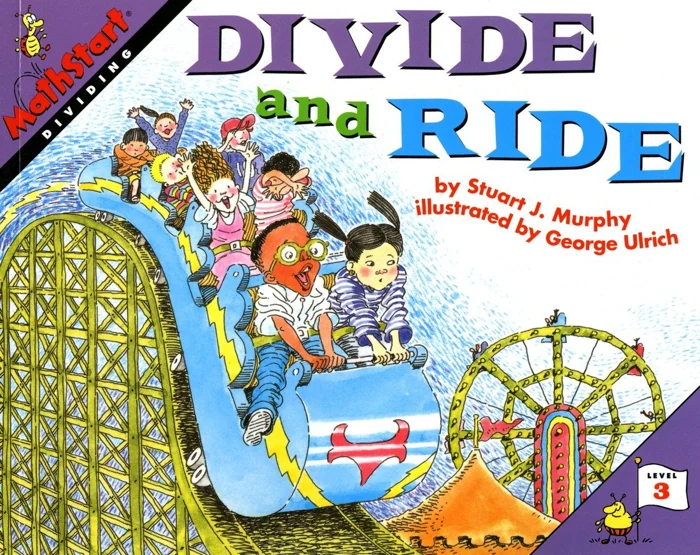
Divide and Ride
Stuart J. Murphy
Equal groups and remainders appear through the practical problem of fitting riders on rides. Use a few counters to try another arrangement.
Consider: Choose one grouping to discuss; the book is a story introduction, not a complete division sequence.
See details →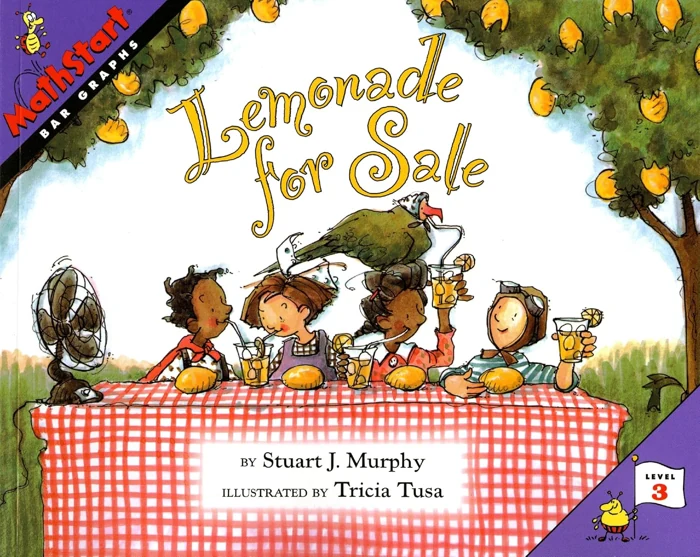
Lemonade for Sale
Stuart J. Murphy
A lemonade stand provides a reason to look at quantities and graphs. Invite your child to explain what the graph shows before calculating.
Consider: Read the story and graph together if chart language is unfamiliar.
See details →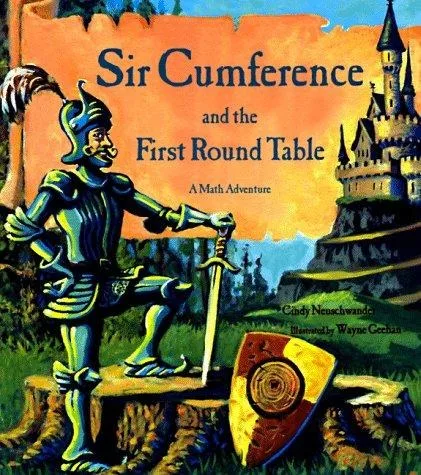
Sir Cumference and the First Round Table
Cindy Neuschwander
A humorous round-table problem introduces geometry and the language of circles. Compare table shapes with paper cutouts.
Consider: The mathematical puns and medieval setting may need a little explanation; preview the publisher sample.
See details →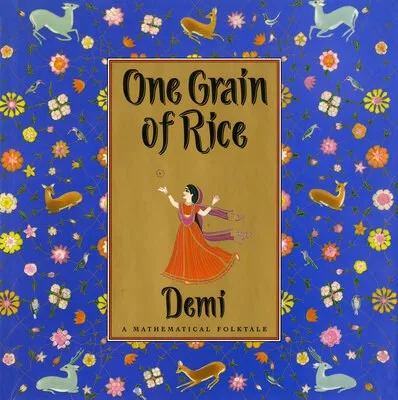
One Grain of Rice: A Mathematical Folktale
Demi
A folktale turns repeated doubling into a surprising story. Small objects can make the early steps tangible.
Consider: The quantities soon become too large to model with counters; switch to a written pattern rather than trying to build every amount.
See details →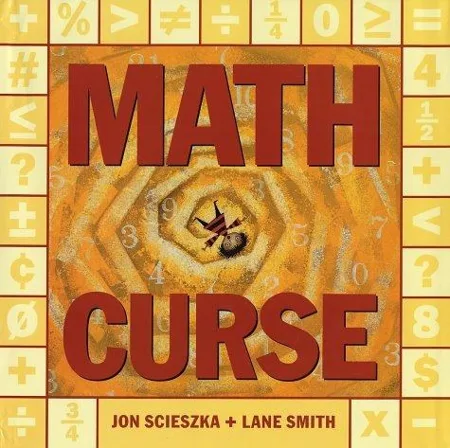
Math Curse
Jon Scieszka
Everyday situations begin to look like mathematical problems in this playful picture book. Ask which question your child would actually like to investigate.
Consider: The joke is the feeling of mathematics everywhere; there is no need to solve every problem in one reading.
See details →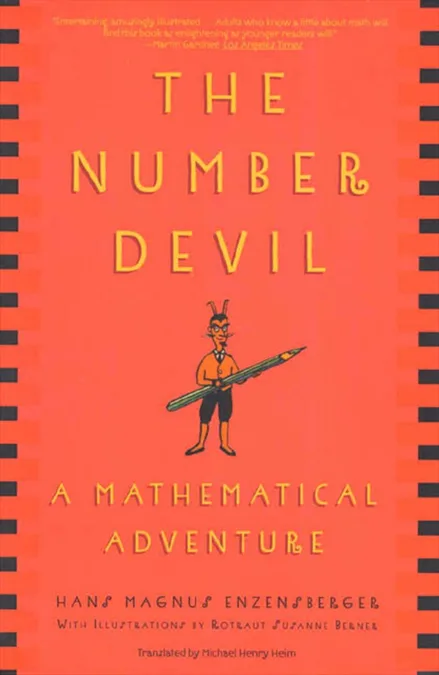
The Number Devil: A Mathematical Adventure
Hans Magnus Enzensberger
A longer dream narrative explores unusual numbers and mathematical patterns for readers who want a more sustained adventure.
Consider: It is a denser choice than a short picture book; the “Number Devil” is a fantasy character, and the tone will not suit every family.
See details →Common questions
Should I choose a math book by my child’s grade?
Use grade or age guidance to narrow the shelf, then preview the actual mathematical idea and language. A familiar idea explained in a new way can be useful, and a read-aloud can support a child who understands more mathematics than they can yet read independently.
Do math stories replace lessons or practice?
They can introduce an idea, provide a new representation or prompt discussion. They do not automatically provide a complete teaching sequence or enough practice for every learner. Choose the book for its particular job.
What if my child dislikes answering questions during books?
Read without interruption first. Later, offer one optional activity connected to a moment they enjoyed. Conversation can happen after the story, and enjoying a book does not require completing an exercise.
A useful next step
Explore math books in the Library →Sources & further reading
Our fit notes are editorial guidance. Reading preferences, comfort and family experience vary.