
Decide whether you want practice or exploration
For practice with addition and subtraction, choose a game that actually asks players to calculate during play. For flexible thinking, look for a choice of operations or several possible ways to reach a target. A game with numbers on its cards is not necessarily an arithmetic practice game.
Scoring can involve mathematics without being the central activity. A parent might add the points while a younger child concentrates on patterns. That can be a useful way to play together, but it is different from expecting the child to practice calculations on every turn.
Match the pace to the learner
Timed mental arithmetic can be exciting for a player who already knows the relevant facts. It can also make a game uncomfortable for someone still working out each answer. Check whether speed is part of the standard rules and whether everyone at the table is comfortable with that pressure.
If you remove a timer or work together in a competitive game, describe that honestly as a family variation. It may make the evening more welcoming, but it changes how the published game plays. A good choice is one where the activity feels inviting before you make a long list of rule changes.
Read the labels beyond the age on the box
Age guidance does not tell you everything about prerequisites. A child may meet the recommended age but still need help with a card’s instructions, a four-operation calculation or a complicated scoring rule. Look at the reading demand and the actual mathematics together.
Also check player counts. Some games work for one player, while others need a larger group. A competitive game can include discussion without becoming a cooperative game; a true cooperative game gives the table a shared outcome under its standard rules. The comparison below keeps these distinctions visible.
What each kind of number play can look like
With Sum Swamp, the calculation determines movement through a short board race. Math Rush uses addition and subtraction in timed team rounds. Adsumudi asks players to find a route to a target number, while Prime Climb offers arithmetic choices within a board race. Those formats give different reasons to calculate.
Sleeping Queens includes arithmetic opportunities within a broader card game. Qwixx is better understood as a dice-and-score-sheet game about choices, probability and risk than as a sequence of computation exercises. Calling both simply “math practice” would hide the distinction that helps a parent choose.
Make the first session a learning round
Explain only what the players need to begin, then walk through a sample turn together. Keep the official rules nearby and make room for questions. A published play-time estimate generally does not include every first-time explanation or a long discussion of a new concept.
When players vary in confidence, you might let someone use counters during a casual round, read a goal aloud or have an adult keep score. Tell everyone which supports you are using before play begins. The aim is a shared understanding of the evening, not a surprise test disguised as a game.
Afterward, ask what made the game enjoyable and what slowed it down. A child who disliked racing might still love a quieter number puzzle. Use that information, along with a favorite game, to refine the next suggestion on the Family Game Shelf.
Find your family’s fit
Explore the matched edition and its details on our shelf. Check current price, seller and availability before buying.
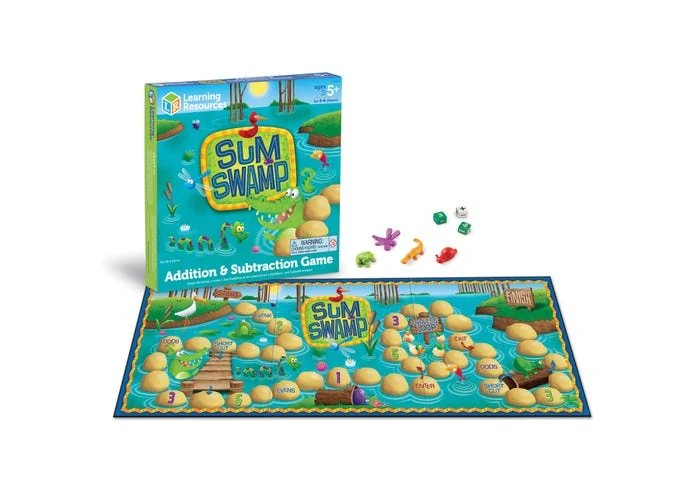
Sum Swamp
Learning Resources
A short starting point when addition and subtraction are the specific practice you want.
Consider: A competitive dice race; check that the calculations match what your child has learned.
See details →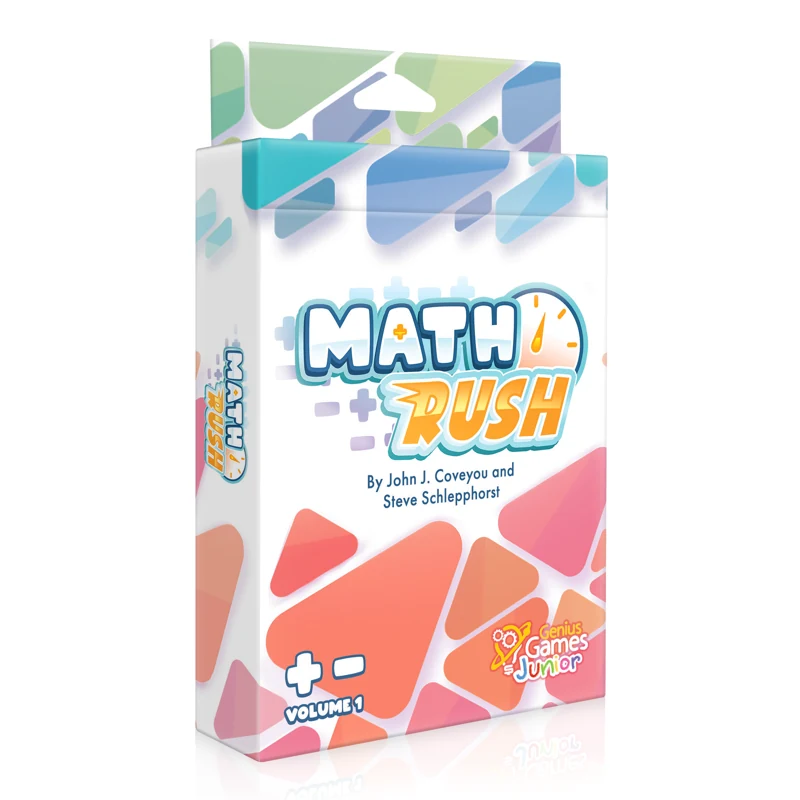
Math Rush: Addition & Subtraction
Genius Games
A shared challenge for players who enjoy quick addition, subtraction and ordering answers.
Consider: Timed play and arithmetic fluency matter; cooperation does not remove the time pressure.
See details →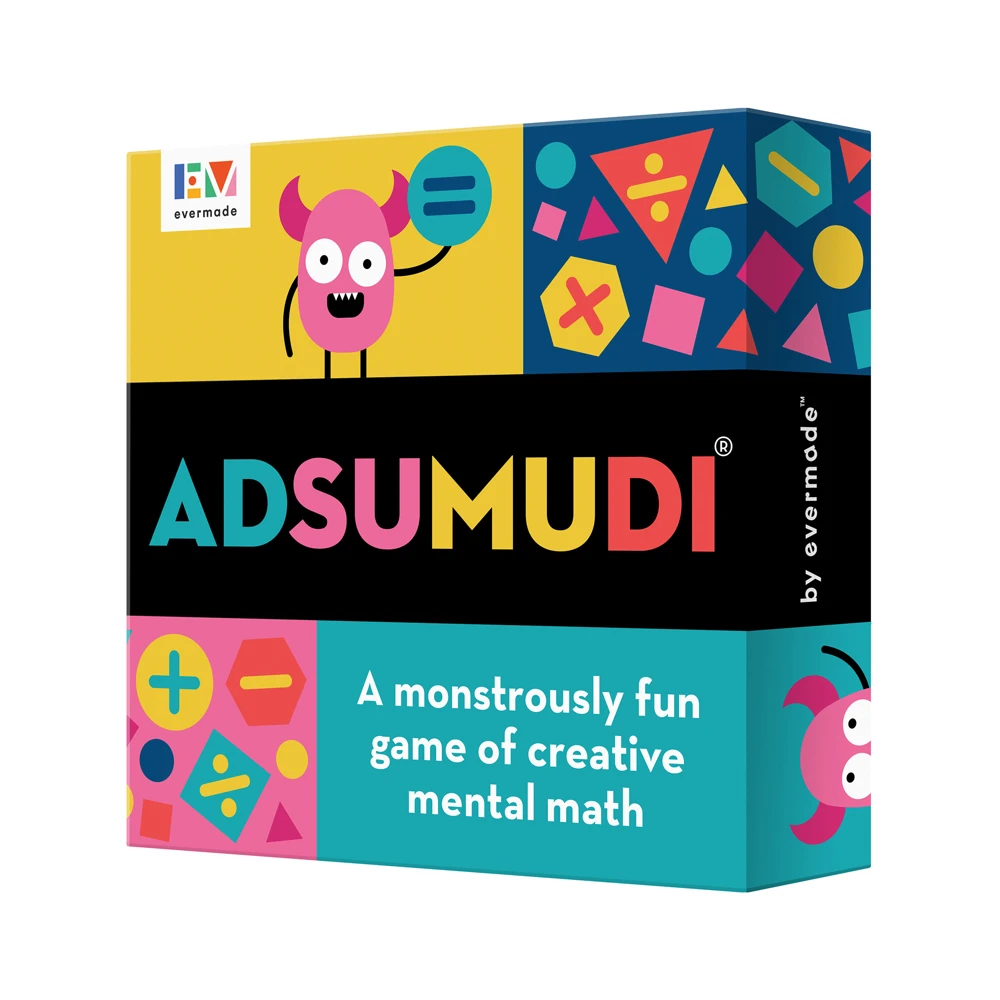
Adsumudi
Evermade
Flexible mental arithmetic for families who like finding more than one mathematical route.
Consider: Check the selected difficulty and operations before starting; standard play is competitive.
See details →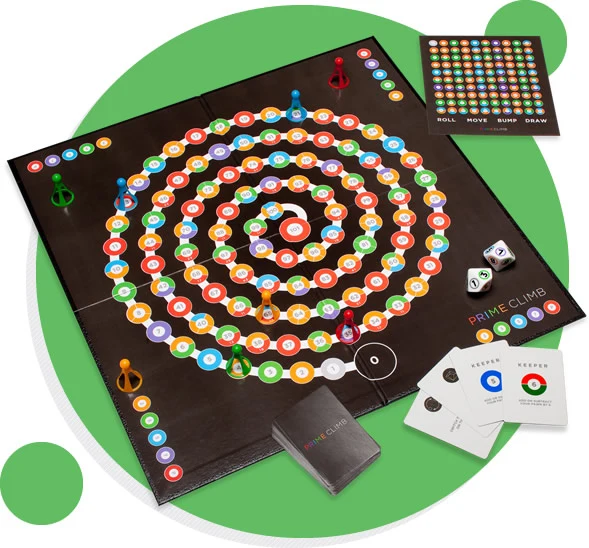
Prime Climb
Math for Love
Arithmetic choices and prime-number colors create a longer number strategy game.
Consider: The standard recommendation is 10+; separate younger-player rules are a different way to play.
See details →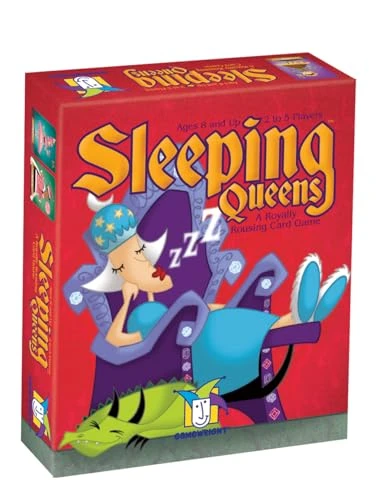
Sleeping Queens
Gamewright
Light arithmetic appears inside a wider card game with memorable characters.
Consider: Special cards and direct competition are central too; it is not uninterrupted calculation practice.
See details →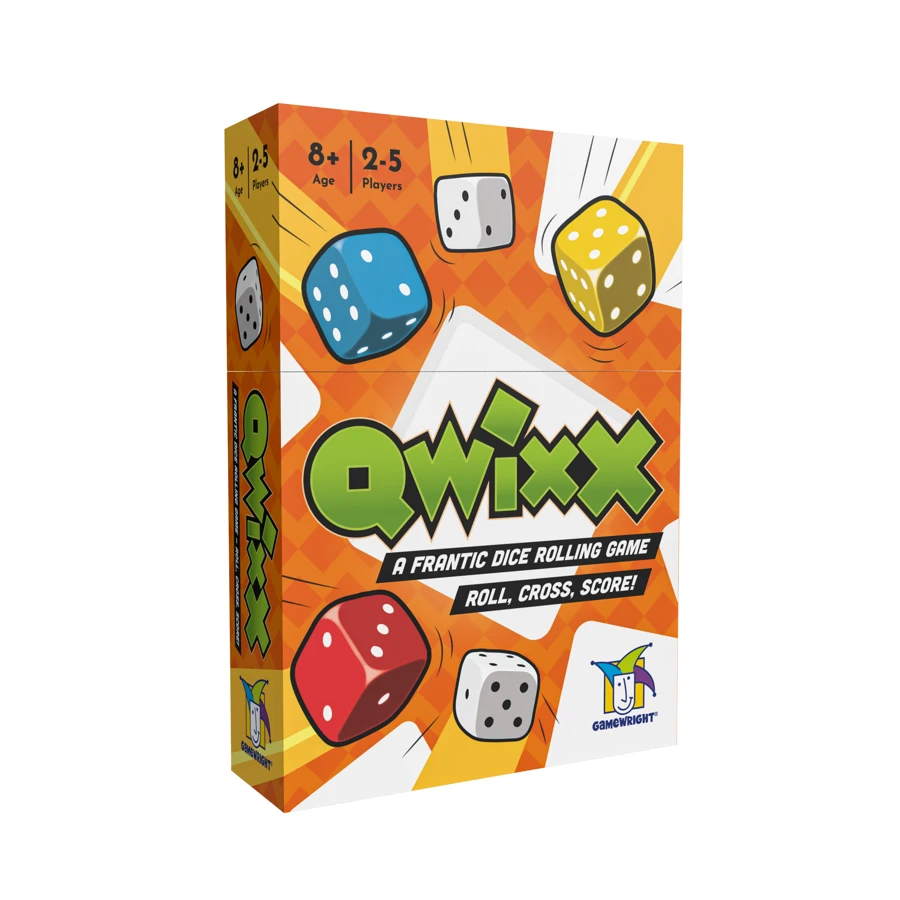
Qwixx
Gamewright
A compact way to discuss number order, probability and the consequences of a choice.
Consider: Dice luck and risk-taking matter more than solving equations; allow an adult to teach scoring.
See details →Common questions
Which games focus directly on addition and subtraction?
Sum Swamp and Math Rush both make those calculations part of play, but their pace differs substantially. Sum Swamp is a dice race; Math Rush uses timed cooperative rounds. Match the format to the players’ comfort, not just the skill label.
Are cooperative math games automatically easier?
No. Sharing an outcome changes the social structure, not necessarily the mathematics. Math Rush still requires quick calculations. A slower competitive game may be a more comfortable first choice for a learner who needs time.
Can we change the rules to play without pressure?
For a casual family session you can agree on a variation, such as discussing answers together or removing a timer. Make the change explicit, and distinguish it from the standard game when comparing player counts or play times.
A useful next step
Browse games that include math →Sources & further reading
Our fit notes are editorial guidance. Reading preferences, comfort and family experience vary.